

Blog
Educate & Motivate
Discover more about managed services, cyber security, cloud solutions and much more.

The blog section of our website contains a wide array of interesting and useful posts, covering the full spectrum of business IT topics. We will share important advice on how to protect your business from common threats, offer tips on how to plan for disasters, and explain the true value of some of the services we provide - all with a view to helping you to become more informed and better equipped to tackle modern business challenges.
If you have a more specific query don’t hesitate to get in touch.
Fifosys Blog and Resources
XDR vs MDR: What’s the Difference, and Which One Does Your Business Need?
Confused by XDR vs MDR? Here’s what UK SMEs and mid-market organisations need to know about modern threat detection, why endpoint security alone is no longer enough, and how broader visibility plus managed response can help reduce blind spots across email, cloud, identity, endpoint, and network environments.

The CISA GitHub Leak Is a Mess. But It’s Also Very Familiar
A major credential leak linked to the US cybersecurity agency CISA has exposed a problem most businesses are far more vulnerable to than they realise. From forgotten API keys to overprivileged supplier access, exposed credentials have become a normal part of modern IT environments. Here’s what UK SMEs and mid-market organisations should actually be paying attention to.
When Supply Chain Attacks Become a Competition: What UK Businesses Need to Pay Attention to
A new threat advisory issued in May 2026 warns of increased risk around software supply chain compromise, including underground activity that appears to reward scale and downstream impact. For UK SMEs and mid-market organisations, the takeaway is not panic. It is a reminder that modern cyber risk does not always start inside your business.

Shadow AI: The AI Risk Already Inside Most Businesses
Shadow AI is already inside most businesses, whether leadership realises it or not. As employees increasingly use AI tools without formal approval, organisations are facing new risks around data handling, compliance, governance, and visibility. Here’s what UK SMEs and mid-market businesses need to know, and how to respond without falling into the trap of blanket bans or unrealistic policies.
Microsoft Copilot for Business. Practical Benefits for UK SMEs and Mid-Market Teams
Microsoft Copilot is quickly becoming one of the most talked-about workplace AI tools for UK businesses, but what does it actually do in practice? In this blog, we explore how Microsoft Copilot helps SMEs and mid-market organisations improve productivity, reduce admin, streamline collaboration, and get more value from Microsoft 365, without adding unnecessary complexity or compromising security.

Unpacking Microsoft’s MFA Push: An Operations Check for Your Business
Microsoft’s MFA enforcement is not just another login tweak. For UK SMEs and mid-market organisations, it is a useful prompt to review admin access, legacy accounts, automations, and whether Microsoft 365 is being actively managed or simply inherited.

Disruption Doesn’t Ask for Notice: What April’s Tube Strikes May Reveal About Your Infrastructure
Disruption doesn’t wait for a convenient moment. And this week’s tube strikes offered a useful reminder of that.
For many organisations, it forced an immediate shift to fully remote working, putting infrastructure, access, and collaboration tools under pressure in a way that planned hybrid setups rarely do. In this blog, we explore what moments like this reveal, and how to sense-check whether your environment is built to cope.

Locking the Door: A Simple Cyber Hygiene Checklist for 2026
Cyber security doesn’t always come down to complex tools or advanced threats. More often, it’s the basics that make the biggest difference.
Following the UK government’s “lock the door” campaign, we’ve pulled together a simple cyber hygiene checklist to help organisations sense-check their current approach, from patching and access control to visibility and response.

The Five Assumptions That Lead to Breaches
Cyber incidents aren’t always the result of sophisticated attacks. More often, they stem from everyday assumptions about how systems work, where responsibility sits, and who is actually at risk.
With around half of UK SMEs experiencing a breach or attack in the past year, it’s clear that those assumptions don’t always hold up. In this blog, we explore five common beliefs that continue to catch organisations out, and why they’re worth challenging.

Don’t Be Fooled: 5 Phishing Tactics to Watch Out for (And How to Spot Them)
April Fools’ Day is built on harmless deception, but phishing attacks are anything but. While prank emails might raise a smile, malicious ones are designed to catch you off guard and exploit trust, urgency or familiarity.
In this blog, we break down five common phishing tactics still catching people out in 2026, and what to look for before you click.
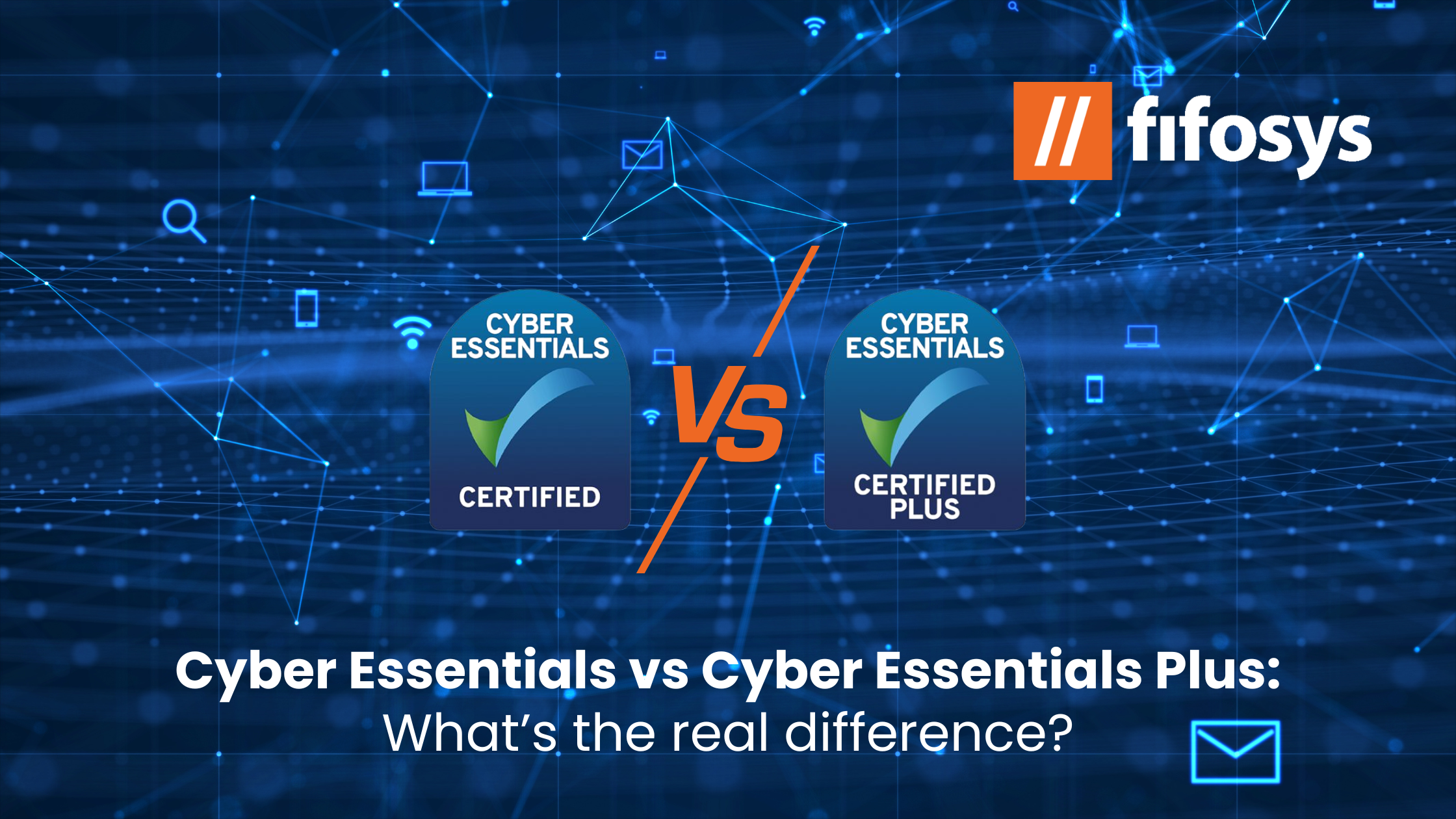
Cyber Essentials vs Cyber Essentials Plus: What’s the Real Difference?
Cyber Essentials has become a baseline requirement for many UK organisations, whether for supply chains or government contracts. But as more businesses look beyond the badge, a key question keeps coming up: is Cyber Essentials enough, or does Cyber Essentials Plus offer something more meaningful?
In this blog, we break down the real difference between self-assessment and independent validation, and why that distinction matters when it comes to understanding your actual security posture.

Eight Years After Cambridge Analytica: Would It Even Matter Today?
Eight years on from the Cambridge Analytica scandal, the questions it raised about data, privacy and control feel less shocking, and more familiar.
At the time, the idea that millions of users’ data could be harvested and used without clear consent felt like a turning point. Today, we operate in a world where data collection underpins much of the technology we use every day.
In this blog, we look back at what actually changed, and why the bigger lesson for organisations in 2026 is not the scandal itself, but how data now moves through modern systems.

What the Companies House Incident Reveals About Cyber Risk
Companies House is one of those systems most people assume simply works. It sits quietly in the background of the UK business environment, holding records for millions of companies and underpinning how organisations verify each other every day.
But recent reports of a vulnerability in the WebFiling system have raised serious questions about how secure that infrastructure really is. Beyond the technical issue itself, the incident highlights something broader: many of the systems businesses rely on sit outside their direct control.
When platforms like this experience problems, the consequences can ripple far beyond the organisation running them.
Your Data, Their Model: What Businesses Need to Understand About AI and Data in 2026
AI is everywhere. In almost every business tool, from productivity software to analytics platforms. But as organisations experiment with these systems, a key question is often overlooked: what happens to your data once it enters an AI model? In this piece, we explore how large language models work, where business data can unintentionally flow, and why governance around AI is becoming increasingly important in 2026.

Locking the Door: Why Basic Cyber Hygiene Still Matters in 2026
The UK government has launched a campaign urging businesses to “lock the door” on cyber criminals, highlighting a simple truth: many attacks succeed because basic protections are missing. From weak passwords to unpatched systems, small gaps can create big risks. Here’s why cyber hygiene still matters in 2026 and why the fundamentals remain your strongest defence.

When Technology Stops the Game: Why Invisible Infrastructure Matters
A six-minute delay in the North London derby was a small disruption with very visible consequences. Tens of thousands waited. Millions watched. All because the technology, which is usually invisible, briefly stopped working. In this piece, we explore what that moment reveals about modern infrastructure and why reliability now underpins experiences far beyond the stadium.

What Is DMARC? Why Domain Protection Matters in 2026
Email remains one of the most trusted channels in business, yet it is also one of the easiest to abuse. If your domain is not properly protected, it can be spoofed without your knowledge, putting your brand and clients at risk. In this piece, we break down what DMARC actually does, why so many organisations still misconfigure it, and why domain protection should be treated as a baseline control in 2026.

Hybrid Work in 2026: Are Your Systems Still Built for 2021?
Hybrid work is no ‘temporary fix’. It’s the operating model for many UK businesses. But while ways of working have matured, much of the infrastructure behind them sometimes hasn’t. From legacy VPN dependence to collaboration sprawl and uneven identity controls, systems built in urgency are now showing their age. This piece explores whether your architecture is truly ready for sustained hybrid operations in 2026.

What the ChatGPT Caricature Craze Really Reveals About Privacy and AI Risk
ChatGPT caricatures are everywhere right now. They’re fun, personalised, and feel low risk. But beneath the surface sits a more uncomfortable reality about data permanence, profiling and workplace exposure. This blog breaks down what’s actually at stake when we feed AI more detail than we realise.
iOS 26.3 - Apple’s Zero-Day Patch - Is the Latest Reminder That Patching and Updates Still Matter
Apple’s latest zero-day patch, delivered in iOS 26.3, is here to fix a vulnerability that was already being exploited. For individuals, it’s a reminder not to ignore update prompts. For organisations, it’s a reminder that unpatched devices are potential entry points into wider systems. In this piece, we break down what happened, why timely updates still matter, and what disciplined patch management looks like in practice.