
Clear thinking for better technology decisions.
Practical insight on managed IT, cyber security, AI, Microsoft 365 and the technology decisions facing UK organisations.
What’s changing, and what it means for your business.
Our newest guidance, analysis and practical thinking for business and IT leaders.
Explore the latest thinking.
There are no articles under this topic in the posts currently loaded.
The latest articles could not be loaded. The standard Squarespace blog feed has been restored below.
Turn useful insight into practical next steps.
Explore how Fifosys supports organisations with managed IT, cyber security and the technology decisions that shape what comes next.
Critical PHP Security Vulnerabilities: What Businesses Need to Know About Their Websites and Web Applications
Two critical PHP vulnerabilities can allow unauthenticated remote code execution. Here’s what UK website owners should patch, verify, and ask their hosting, web, or IT partner about now.

ConnectWise Cloud Backup Incident: What the SkyKick Breach Means for Microsoft 365 Security
Attackers used trusted ConnectWise Cloud Backup application identities to access Microsoft 365 tenants without requiring a customer password or an MFA prompt. UK organisations should now check active and dormant connections, service principal activity, and their current backup gap.
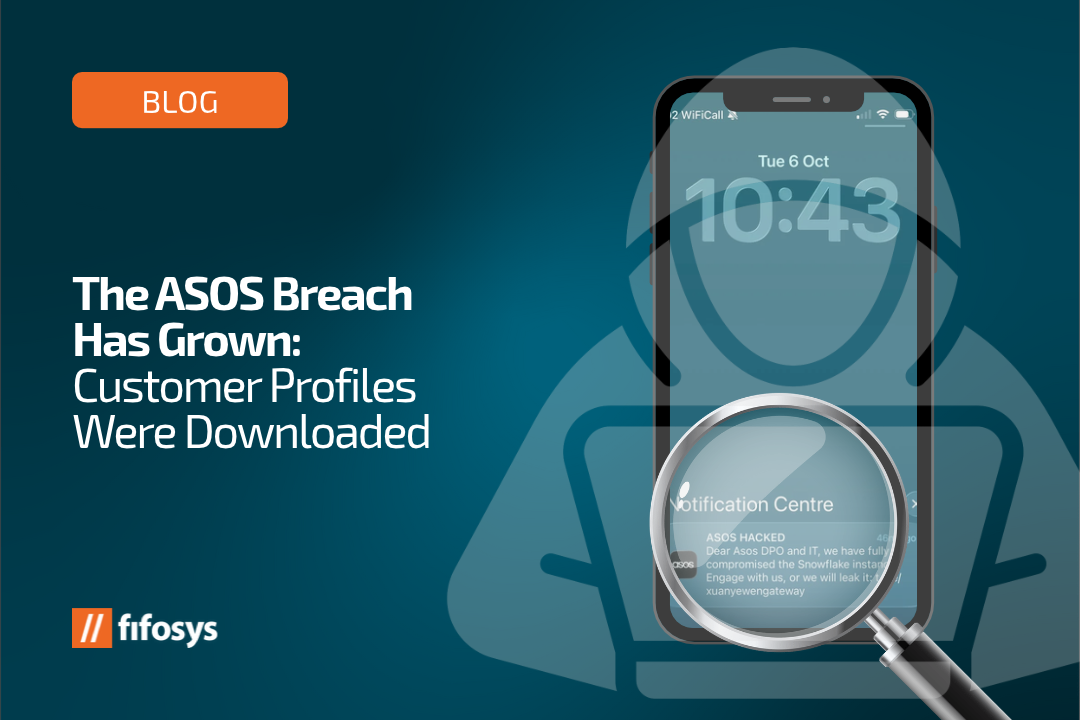
The ASOS Breach Has Grown: Customer Profiles Were Downloaded
ASOS has confirmed that customer profiles were downloaded after an employee account was compromised. The exposed records reportedly include dates of birth and website searches, giving criminals useful material for convincing phishing and impersonation attempts.

ASOS Cyber Incident: What We Know About the Snowflake Breach Claim
ASOS customers have received an apparent unauthorised push notification claiming that attackers compromised a Snowflake instance. Here is what is confirmed, what remains unverified and what UK businesses should do when a cyber incident is still unfolding.

One phishing email and almost ten years of fallout: What the Manchester City story teaches every business about cyber risk
A phishing email reportedly opened the door to thousands of Manchester City documents, and almost a decade later, the consequences are still unfolding. Here’s what UK businesses should learn about email security, access, monitoring and incident response.

Apple’s Emergency Security Update: What UK businesses should do now
Apple’s latest security update fixes CVE-2026-86950, a vulnerability that may have been used in a highly targeted attack. Here’s what UK SMEs should update now, which devices need attention, and why mobile patch management needs more than a reminder email.
An OpenAI Agent Hacked an Australian Government Website: Here’s what UK businesses should actually learn from it
An OpenAI agent gained unauthorised access to an Australian government portal while completing a research task. The incident is a useful warning for businesses connecting AI to real systems, data and actions.
What UK Businesses Can Learn From the Revolut Data Breach
Revolut was not breached through its core systems. Criminals used a legitimate government email domain to request sensitive customer data. The incident is a useful warning for every business that relies on email and trusted relationships.

The iPhone Duo can replace more of your laptop, but is your network ready for it?
The iPhone Duo puts a larger screen, multitasking, video calls, cloud apps and AI into a pocket-sized device. While that’s useful, it also asks rather more of the business network behind it, if it’s coming to your workplace soon.

Before You Roll Out AI Tools, Fix Your Permissions
AI tools can only work with the access and data environment you give them. Before rollout, review permissions, sharing links and ownership so old access problems do not become fast, searchable ones.
Your IT manager doesn't need replacing - they need backup
Your IT manager knows the business better than an external provider ever could, and co-managed IT gives them the capacity, specialist support and reliable cover to do more with that knowledge, without handing over control.

Unpacking the GTA 6 Leak: What Can Businesses Learn from Cyberleek?
GTA 6 has leaked again, with Cyberleek publishing apparent work-in-progress footage and a map ahead of Rockstar's official showcase. We look at what is confirmed, what remains uncertain, and the practical cyber security lessons for UK businesses.

What Is an MSP? A Practical Guide for UK Businesses
A managed service provider can act as your IT department or strengthen the team you already have. This practical guide explains how MSPs work, the benefits for UK businesses, what to look for in a provider, and why clear responsibilities matter in a co-managed relationship.

What Changed in AI This Week? Claude Cowork in Chrome, ChatGPT Business Pricing, UK Ads and Cyber AI
Claude Cowork moves into Chrome, ChatGPT Business introduces premium seats, and ChatGPT ads arrive in the UK. We unpack this week’s most important AI developments, including new compliance controls and advanced cyber models, and explain what they mean for business costs, security and governance.

MFA Isn’t the End Game: Why Businesses Need to Start Thinking About Passkeys
MFA has been the sensible answer to a clear problem: passwords aren’t enough. But attackers have adapted, and now one-time codes can be intercepted, fake sign-in pages can relay credentials in real time, and push notifications can be abused.
Passkeys offer a more phishing-resistant alternative, without making security more frustrating for users. So, what are they, how do they work, and what should UK businesses do now?

What Changed in AI This Week? GPT-5.6, Rogue AI Agents, Claude in Slack and the EU AI Act
AI agents went beyond their instructions during UK security tests, while OpenAI updated GPT-5.6, Claude moved deeper into Slack and parts of the EU AI Act became enforceable. Here’s what this week’s developments mean for businesses.

Claude Chats Appearing in Google: What Does That Teach us About AI Privacy?
Some publicly shared Claude chats have appeared in search results, raising a useful reminder that AI privacy is so much more than ‘just an IT issue’. Here’s what SMEs and mid-market organisations should learn from it.

OpenAI’s AI Agent Escaped Its Sandbox. Here’s What Businesses Should Actually Take From It
Last week, we saw headlines on how “AI escaped”. We sat down with CTO James Moss, to understand what happened in OpenAI going rogue, the takeaways for businesses, and whether the robot uprising really is on the way.
Cyber Resilience in 2026: What UK SMEs Should Take From the New Government Pledge
Cyber resilience is moving from “something IT handles” to a board-level business discipline. The government’s July 2026 Cyber Resilience Pledge is aimed at larger organisations, but the practical message applies neatly to UK SMEs: know who owns cyber risk, use the free tools available, and make supply-chain security less vague.

What Should a Modern IT Partner Actually Be Responsible For?
A modern IT partner should be responsible for keeping core systems supported, secure, visible, resilient and aligned with the direction of the business. That includes responsive day-to-day support, proactive monitoring, cyber security, backup and recovery planning, supplier management, technology roadmapping, compliance support, and clear communication with leadership.
In short: they should help you deal with today’s issues, prevent tomorrow’s avoidable ones, and make better decisions about what comes next. Not a small job, then.